
[SAMPLE ARTICLE — edit with local London context before publishing]
The Transition movement began in Totnes, Devon in 2006, when environmental educator Rob Hopkins asked his students to design a post-peak-oil future for their town. The ideas they came up with — which became known as the 'Energy Descent Action Plan' — were enthusiastically adopted by the local community, and Transition Towns was born.
The key insight of Transition is deceptively simple: if fossil fuels will eventually run out, and if burning them is changing our climate, then the communities that plan positively for a future without them will be much better placed than those who wait for crisis to force the issue.
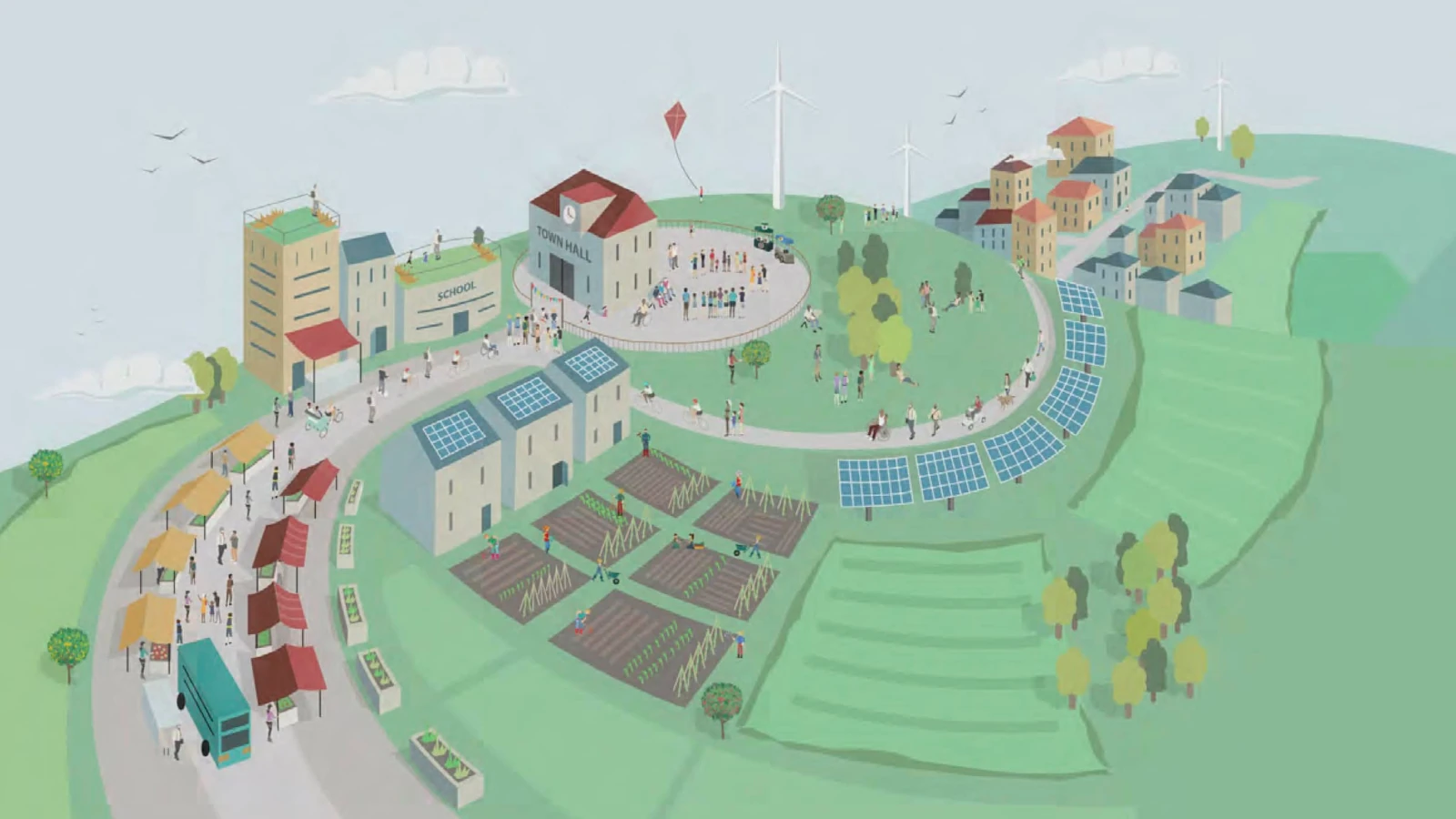
Transition is not a doom-and-gloom movement. It asks: what if the future we are heading towards could actually be nicer than the one we have now? What if communities reconnected, grew more of their own food, generated local energy, repaired things rather than throwing them away, and rebuilt the local economies that globalisation has eroded?
The Transition model in practice
Transition groups are community-led. There are no membership fees, no formal hierarchy, and no single template for what a group should do. What all groups share is:
- A positive, solutions-focused approach to climate change and peak oil
- A belief that change happens at community level, not just in government
- A commitment to bringing in people who aren't already activists
- A practical, 'just do it' spirit
In the UK alone there are over 200 active groups. Globally, the Transition Network connects over 1,000 groups in 51 countries.
Transition in London
London has had Transition groups since 2007. The London Hub brings them together every month to share experiences, plan joint projects, and support each other. Groups range from long-established organisations like Transition Ealing and Transition Tooting to newly-forming groups like Transition FP&CE.
To find out more about the global movement, visit transitionnetwork.org.